Preventing Acute Kidney Injury in Radiology and Vascular Surgery: What a European Care Pathway Should Include
AKI (Acute Kidney Injury) is one of the most significant complications following procedures involving iodinated contrast media, particularly in patients with chronic kidney disease, diabetes, heart failure, dehydration or advanced age.
European recommendations do not advise automatically avoiding iodinated contrast media. Instead, they recommend assessing risk, implementing proportionate preventive measures and measuring outcomes after the procedure.
A truly effective care pathway goes beyond the choice of contrast medium: it includes diagnosis, patient selection, procedural protocols, monitoring and audit.
1. Which diagnostic standards should be applied before the procedure?
Before an examination or intervention involving potential exposure to contrast media, the team should document at least the following:
- Serum creatinine and eGFR (estimated Glomerular Filtration Rate), preferably calculated using validated equations such as CKD-EPI;
- history of chronic kidney disease, previous AKI, dialysis or kidney transplantation;
- diabetes, heart failure, hypotension, sepsis and dehydration;
- potentially relevant medications, such as non-steroidal anti-inflammatory drugs and other medicines that may increase risk under specific conditions;
- previous reactions to iodinated contrast media, distinguishing an allergic reaction from a renal event;
- type and urgency of the procedure, route of administration and anticipated contrast volume.
According to ESUR (European Society of Urogenital Radiology) recommendations, particular attention is generally required in patients with an eGFR below 30 mL/min/1.73 m² receiving intravenous contrast media and in patients with an eGFR below 45 mL/min/1.73 m² when intra-arterial injection with potential first-pass renal exposure is planned. These thresholds must be interpreted in the clinical context, particularly in emergencies.
2. AKI, CA-AKI and CIN: which terms should be used?
The term CIN (Contrast-Induced Nephropathy) is now used with greater caution, because many factors can contribute to worsening kidney function after a procedure.
It is preferable to distinguish between:
- CA-AKI (Contrast-Associated Acute Kidney Injury): AKI occurring after exposure to contrast media, without necessarily demonstrating that the contrast medium is the cause;
- CI-AKI (Contrast-Induced Acute Kidney Injury): AKI attributable to contrast media after other causes have been excluded as far as possible.
The KDIGO (Kidney Disease: Improving Global Outcomes) criteria define AKI, among other parameters, as an increase in serum creatinine of at least 0.3 mg/dL within 48 hours or to 1.5 times the baseline value within 7 days; urine output criteria may also apply.
3. Which preventive measures are recommended?
Prevention must be individualised and documented. It generally includes:
- correcting dehydration when clinically appropriate;
- using the minimum dose of iodinated contrast medium required to achieve an adequate diagnostic or therapeutic result;
- preferring low- or iso-osmolar iodinated contrast media in at-risk patients, in accordance with local protocols;
- avoiding non-essential contrast-enhanced examinations performed in close succession;
- hydration with saline in selected patients, assessing the risk of fluid overload in patients with heart failure or advanced kidney failure;
- reassessing medications and clinical conditions as directed by the responsible physician;
- adopting contrast-sparing or Zero Contrast strategies when the anatomy and procedure allow.
N-acetylcysteine is not considered a substitute for hydration and good procedural practice. Pharmacological prophylaxis should also be evaluated in accordance with up-to-date guidelines and the centre's protocols.
4. When should CO₂ be considered?
CO₂, or carbon dioxide, may be considered an alternative or a complement to iodinated contrast media in various vascular procedures below the diaphragm, particularly in patients at high renal risk or with a previous reaction to iodinated contrast media.
However, it is not a universal solution. CO₂ must not be used for cerebral or coronary arterial angiography and requires specific assessment in the presence of right-to-left cardiac shunts, significant pulmonary hypertension, severe bronchopulmonary disease or other conditions specified in the instructions for use and specialist protocols.
Imaging quality depends on the anatomy, vascular territory, patient position, technique and the team's experience. A CO₂-first pathway must therefore include training, criteria for switching to iodinated contrast media and a clear approach to managing suboptimal conditions.
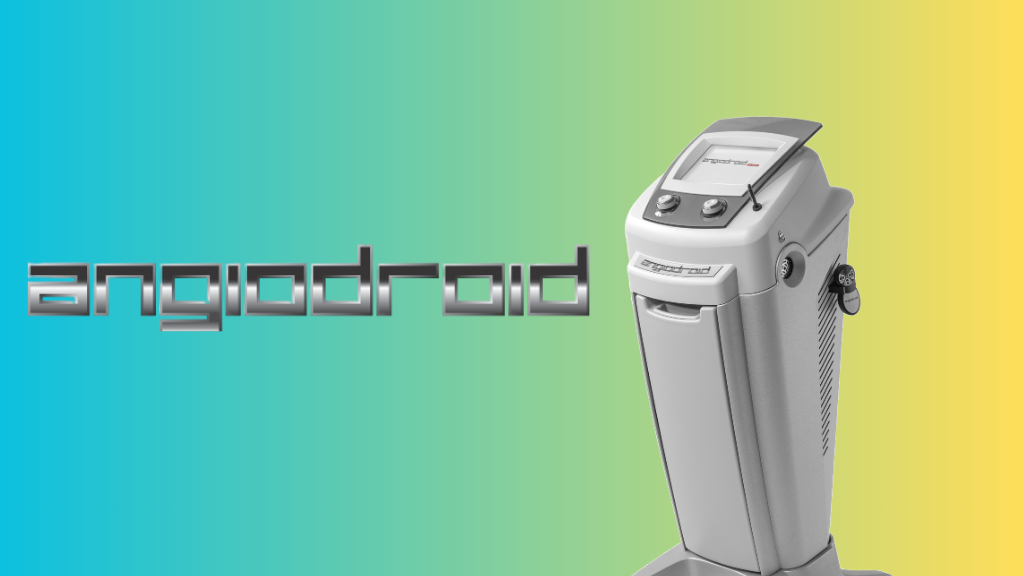
An automated digital injector, such as the Italian-made Angiodroid system, can help make the workflow more controlled, repeatable and traceable. Technology does not replace clinical judgement: it supports it within a validated protocol.
5. How should AKI and CA-AKI be monitored after the procedure?
A meaningful audit should include a pre-procedural creatinine measurement and a post-procedural check in at-risk patients, generally within 48-72 hours when clinically indicated. In hospitalised patients, it is also important to record urine output and intercurrent clinical events.
The registry should include:
- total number of procedures using iodinated contrast media, CO₂ or a combined approach;
- baseline eGFR and risk category;
- iodinated contrast volume in millilitres and the contrast/eGFR ratio, where specified by the protocol;
- radiation dose and procedure duration;
- percentage of CO₂-only, CO₂-first and contrast-sparing procedures;
- incidence of AKI according to KDIGO criteria;
- need for dialysis, intensive care admission, complications and in-hospital mortality;
- length of stay, 30-day readmissions and direct costs;
- any conversions from CO₂ to iodinated contrast media and the clinical rationale.
A simple formula for incidence is: new AKI cases within the time window defined by the protocol / number of evaluable procedures × 100. It is essential to specify the time window, denominator and diagnostic criteria; otherwise, data from different institutions cannot be compared.
6. What is the impact on costs and length of stay?
AKI is associated with longer hospital stays, more laboratory tests, greater resource use, a risk of readmission and, in severe cases, the need for renal replacement therapy. Observational studies show a consistent association between AKI and increased hospital costs, but the extent varies according to severity, comorbidities, procedure and healthcare system.
To avoid generic estimates, hospital management should conduct a before-and-after analysis or a comparison between cohorts, measuring:
- average cost per procedure;
- cost of consumables and contrast media;
- average length of stay;
- cost of renal complications;
- readmissions within 30 days;
- cost of training and implementing the new protocol;
- potential savings associated with reduced use of iodinated contrast media and fewer complications.
The economic benefit of a CO₂-first strategy should not be asserted in the abstract: it must be demonstrated using local data, clinical indicators and an adequate observation period.
7. What should be included in technical tender specifications?
Technical tender specifications for a CO₂ angiography system should address at least the following:
- compliance with the European Medical Device Regulation (MDR) 2017/745 and applicable CE marking requirements;
- unique device identification, batch traceability and consumables management;
- technical documentation, risk analysis in accordance with ISO 14971 and information for use in Italian;
- control of injection parameters, repeatability and recording of procedural data;
- compatibility with existing angiography systems and workflows;
- safeguards against connection errors, contamination and improper use;
- a preventive maintenance plan, technical support and response times;
- initial training, periodic refresher training and support during the first cases;
- outcome indicators: reduction in iodinated contrast volume, percentage of CO₂-first procedures, AKI rate, conversions, procedure times and operator satisfaction;
- cybersecurity and access management requirements when the device is connected to networks or information systems;
- a plan for clinical and economic evaluation at 6 and 12 months.
The tender specifications should distinguish mandatory regulatory requirements from added-value award criteria, such as advanced training, implementation support, interoperability and the availability of real-world data.
AKI prevention is neither a single product nor a single prescription. It is a measurable care pathway that combines patient selection, diagnosis, procedural technique, training and outcome analysis.
For interventional radiology, vascular surgery and hospital management, the next step is to define a shared protocol, establish a local baseline and assess whether a CO₂-first strategy can reduce iodine exposure without compromising safety, image quality or clinical outcomes.
Reference sources: ESUR Contrast Media Safety Committee, guidelines on contrast media safety; KDIGO Clinical Practice Guideline for Acute Kidney Injury; European Medical Device Regulation (MDR) 2017/745; up-to-date recommendations and scientific publications on CA-AKI, vascular procedures and renal preservation.