
Angiodroid is Commitment
OUR COMMITMENT DEFINES US
At Angiodroid, commitment is more than a value—it is the principle inspiring every innovation in CO2 angiography.
We empower clinicians with safer, reliable, renal-friendly imaging solutions designed for the patients who need them most.
Commitment as a Corporate Standard
For Angiodroid, commitment is a discipline. It means delivering technologies that are scientifically sound, operationally efficient, and clinically meaningful. It also means understanding the daily challenges of vascular specialists—and responding with clarity, precision, and responsibility.
Commitment to Safer Imaging
Our goal is simple: to make safer imaging the global standard of care. Through advanced CO2 delivery systems and continuous research collaboration, we support clinical decision-making where iodinated contrast agents carry unnecessary risk.
- Fully automated CO2 injection technology
- Consistent, high-quality angiographic imaging
- Optimized workflows for interventional teams
- Scientific partnerships with hospitals worldwide
Commitment to Excellence
Excellence is not an achievement, but a continuous process. We invest in engineering, training, and clinical support to ensure that every Angiodroid system delivers reliability, reproducibility, and operational fluency.
Commitment to the CO₂mmunity
We stand with a global community of clinicians who believe in a safer approach to vascular imaging. Through shared experiences, evidence, and innovation, we are shaping a new culture of responsible angiography.
Commitment You Can Measure
Our commitment is tangible and measurable. We collaborate with clinical partners worldwide to improve outcomes and make safer imaging practices broadly available.
- +800 clinical departments engaged in CO2 Angiography
- Presence in 60+ countries
- 10+ years of dedicated R&D in CO2 angiography
- Thousands of procedures supported annually
Angiodroid is Evolution
WE'RE SHAPED BY EVOLUTION
From humble beginnings to increasingly ambitious goals, Angiodroid has been constanstly raising the bar of what's attainable.
Just like all living beings, we grow and adapt to become the best version of ourselves.
From vision...
Protecting the more fragile patients and their kidneys is the main driver our company.
As ICM is one of the main casuses of CIN and allergic reactions, Carbon Dioxide has been used since 1971 as unique and most valid alternative to iodine contrast medium in angiography for its totally un-allergic and non-toxic qualities; this is what led Sebastiano Zannoli to found Angiodroid in 2013.
Since then, our mission has taken us all over the world.
...to execution...
Throughout the years, the imaging technology has improved to a point that already impressive CO₂ images are virtually indistiguishable from ICM ones. This is a comparison between ICM and CO₂:
...to future endeavors
As the world changes, so are we; we're proud to be part of some groundbreaking clinical trials that aim to make the world a safer and healthier place, including:
- PeriPREVENT, investigating the short- and long-term impacts of contrast media on kidney health. With thousands of patients receiving contrast agents daily, this research is crucial in addressing the ongoing debate about their potential nephrotoxic effects;
- KID trial, which will evaluate whether using CO₂ instead of iodinated contrast reduces the risk of AKI and short-term renal function decline in this high-risk group.
In the meantime, as Angiodroid reached its 10th year, the company turned from Srl (Limited Liability Company) to SpA (Joint Stock Company); looking back, we went a long way. Looking forward, we still have a long way to go, and we'll always have, because evolution never stops.
PRESERVATION IS THE KEYWORD
Not all patients are the same: many of them are more fragile than others, and it's Angiodroid's goal to preserve their health in the safest way.
That is the meaning behind #SaveTheKidneys, our tagline.
Recent data highlights a significant challenge: in 2021, 11% of the world's adult population—approximately 537 million people—were living with diabetes. This number is projected to rise to 12% (783 million people) by 2045. For many of these individuals, diabetes does not exist in isolation. It often brings complex comorbidities that require specialized care.

The intersection of Diabetes, PAD and Kidney Health
The relationship between diabetes and other chronic conditions is profound. Notably:
-
Peripheral Artery Disease (PAD): 40% of patients with PAD suffer from both diabetes and Chronic Kidney Disease (CKD)
-
Diabetic Nephropathy: Roughly 107 million people worldwide are affected by type II diabetic nephropathy
These "fragile patients" require optimized treatment options to protect their overall health, particularly their kidney function.

A Safer Path in Endovascular Procedures
When diabetic patients with CKD must undergo endovascular procedures, the choice of contrast media is critical. Traditional iodinated contrast media can increase the risk of contrast-induced Acute Kidney Injury (AKI).
Carbon dioxide (CO₂) offers a significant clinical advantage in these cases, because it avoids the risks associated with iodinated media.
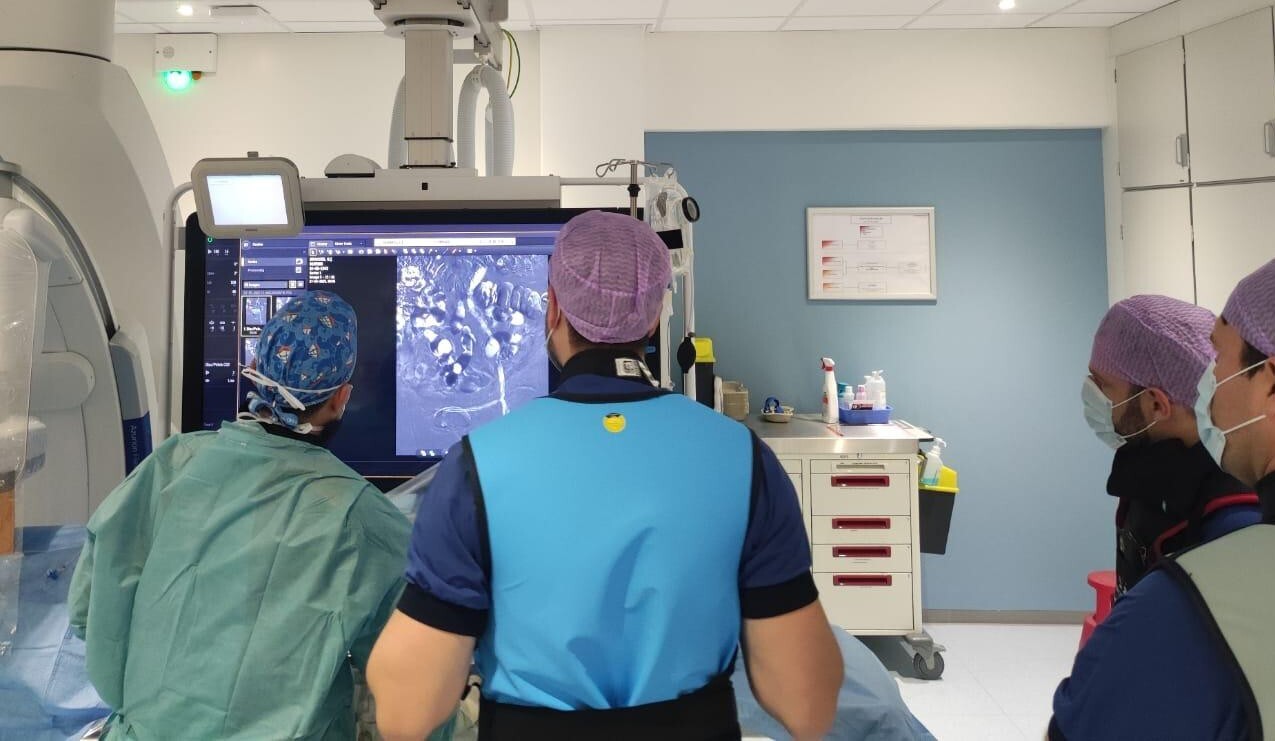
Putting Patient First
In the month of World Kidney Day, the focus for us remains on providing "best-in-class care" for vulnerable patients all around the world.
By prioritizing kidney health and utilizing alternatives like CO₂ when appropriate, medical professionals can better serve the millions of people navigating the complexities of chronic diseases.
There is no motivation like preservation