News, Past Events
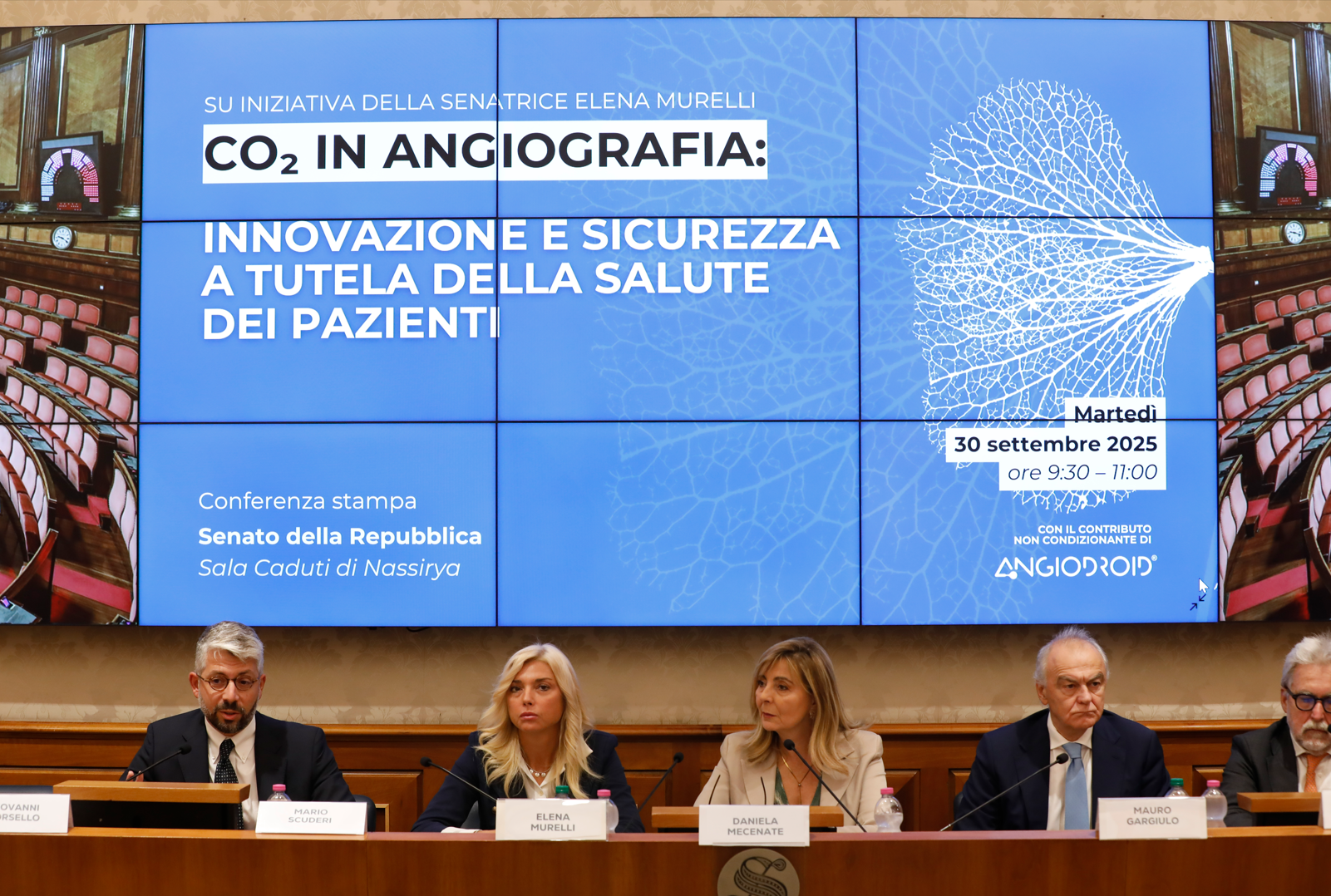
On February 12th, 2026, the French Senate hosted the press conference “Patient Safety and Responsible Innovation in Healthcare: CO2 in Angiography, Preserving Renal Function”, promoted by Senator Alain Milon with the contribution of several scientific and healthcare associations: Handicap République et Société (HRS), Société de Chirurgie Vasculaire et Endovasculaire (SCVE) and the National Federation of Radiologist Physicians (FNMR). In the sake of our mission to #SaveTheKidneys, it was a great honour for us to partake in this important event with our non-conditional presence.
CO₂ Angiography: Advancing Patient Safety and Innovation in Interventional Imaging
CO₂ angiography is increasingly recognized as a valuable alternative to iodinated contrast media, particularly for patients at risk of contrast-induced nephropathy. This topic was at the center of a high-level conference held on February 12, 2026, at the French Senate, dedicated to patient safety and healthcare innovation.
Bringing together healthcare professionals, clinical experts, and institutional stakeholders, the event highlighted the growing role of CO₂ injection in angiography as part of a more sustainable and patient-centered approach to interventional radiology and vascular surgery.


.jpeg?width=1200&length=1200&name=Copie%20de%20WhatsApp%20Image%202026-02-12%20at%2023.25.38%20(1).jpeg)
Reducing Nephrotoxicity and Supporting Sustainable Healthcare
Patients with reduced nephron reserve, hypovolemia, or multiple comorbidities are particularly exposed to kidney injury. In this context, CO₂ angiography represents a clinically relevant solution to reduce exposure to iodinated contrast agents.
Environmental sustainability was also addressed during the discussions. Global iodine resources are limited and concentrated in Chile and Japan, making supply chains vulnerable. While recycling initiatives exist, their impact remains limited, reinforcing the need for alternative contrast strategies.
Iodinated contrast media remain the reference standard in angiography, but their use is associated with risks such as hypersensitivity reactions and nephrotoxicity, especially in patients with pre-existing renal impairment. The key question today is how to integrate these innovations into routine clinical practice while ensuring patient safety and sustainable healthcare funding.
Dr. Sophie Aufort, Interventional Radiologist at Group Imaneo, Montpellier
In our daily job, we face the paradox of treating patients and, at the same time, causing them some kind of damage.
Dr. Laurence Destrieux, General Secretary at SCVE, Vascular Surgeon at Chirurgie Vasculaire du Lac, Annecy
Automated CO₂ Injection: A Proven and Expanding Technology
The adoption of automated CO₂ injectors has significantly contributed to the clinical development of CO₂ Angiography. Currently, 26 hospitals in France are equipped with automated CO₂ injection systems, with 14 additional centers expected to follow.
The automated CO₂ injector developed by Angiodroid has already been used in over 259,000 interventional procedures worldwide, supporting both diagnostic and therapeutic applications.
CO2 Angiography has always raised a natural interest, because it has always presented lots of promises.
Dr. Éric Chevallier, Vice President at the FNMR, Interventional Radiologis, Private Hospital Océane, Vannes
In the past, CO₂ was injected manually, without precise control of pressure. This could cause pain and ischemic effects. Automated CO₂ injection now allows precise control of both volume and pressure, enabling safe and painless vascular imaging.
Dr. Gilles Goyault, Interventional Radiologist, Clinique Rhéna, Strasbourg
A New Imaging Paradigm in Interventional Radiology and Vascular Surgery
CO₂ angiography introduces a different imaging approach compared to iodinated contrast agents, requiring adaptation by clinical teams. This imaging paradigm requires a learning curve, but experts agree that the clinical benefits outweigh initial challenges. Ongoing collaboration between clinicians and imaging technology manufacturers is essential to further optimize image quality and workflow integration.
With iodinated contrast, we visualize vessels through X-ray absorption. With CO₂, we work with a gas that allows X-rays to pass through. CO₂ diffuses rapidly, even through severely stenotic vessels, offering unique diagnostic insights. It takes some "new glasses" to use it.
Dr. Stéphan Haulon, Vascular Surgeon, Paris Saint‑Joseph Hospital, Paris
CO₂ Angiography as a Key Tool for Contrast Media Reduction
While iodinated contrast agents remain necessary in certain complex interventions, CO₂ angiography is increasingly recognized as a strategic tool for significantly reducing contrast media use. Future advances in artificial intelligence and image processing are expected to further enhance CO₂ angiography, supporting wider adoption and expanding clinical indications.
As healthcare systems worldwide focus on kidney protection, patient safety, and sustainable innovation, CO₂ angiography is emerging as a key component of modern interventional imaging.
Today, it is still difficult to perform a complete angioplasty without any iodinated contrast. However, CO₂ angiography should be seen as a major lever for contrast reduction, improving patient safety without compromising procedural outcomes.”
Dr. Gilles Goyault, Interventional Radiologist, Clinique Rhéna, Strasbourg