
#SaveTheKidneys:
When pizza becomes a calendar event
When pizza becomes a calendar event
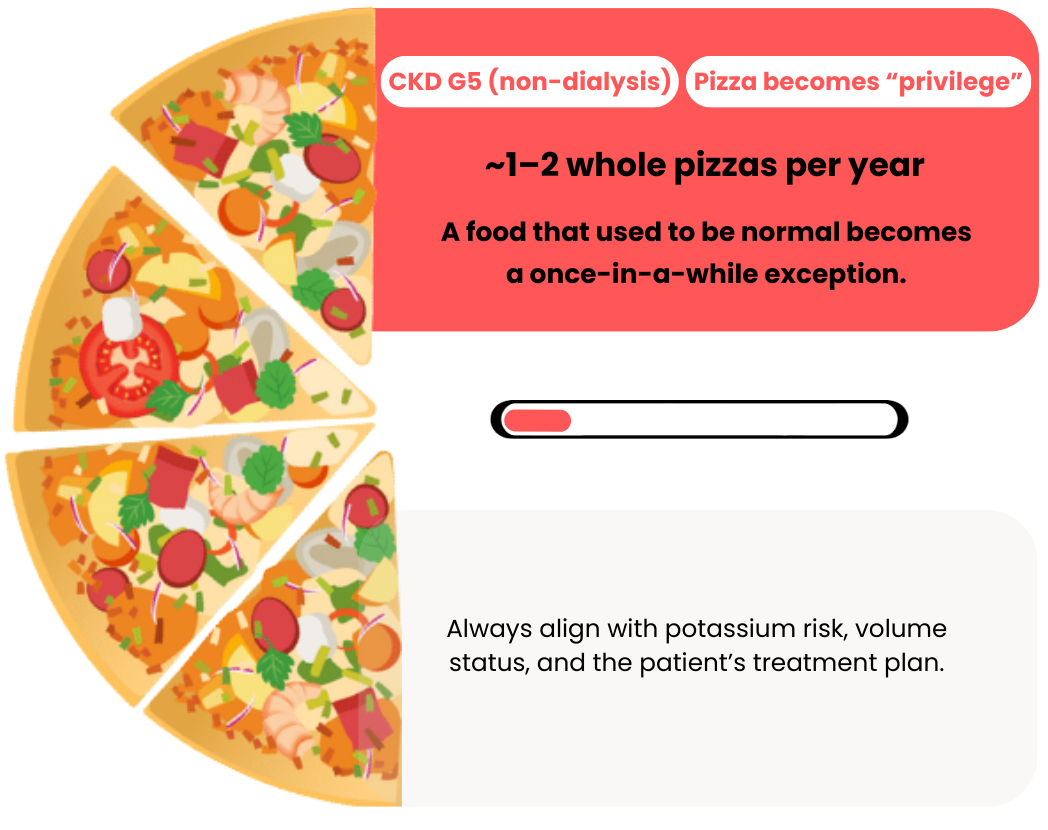
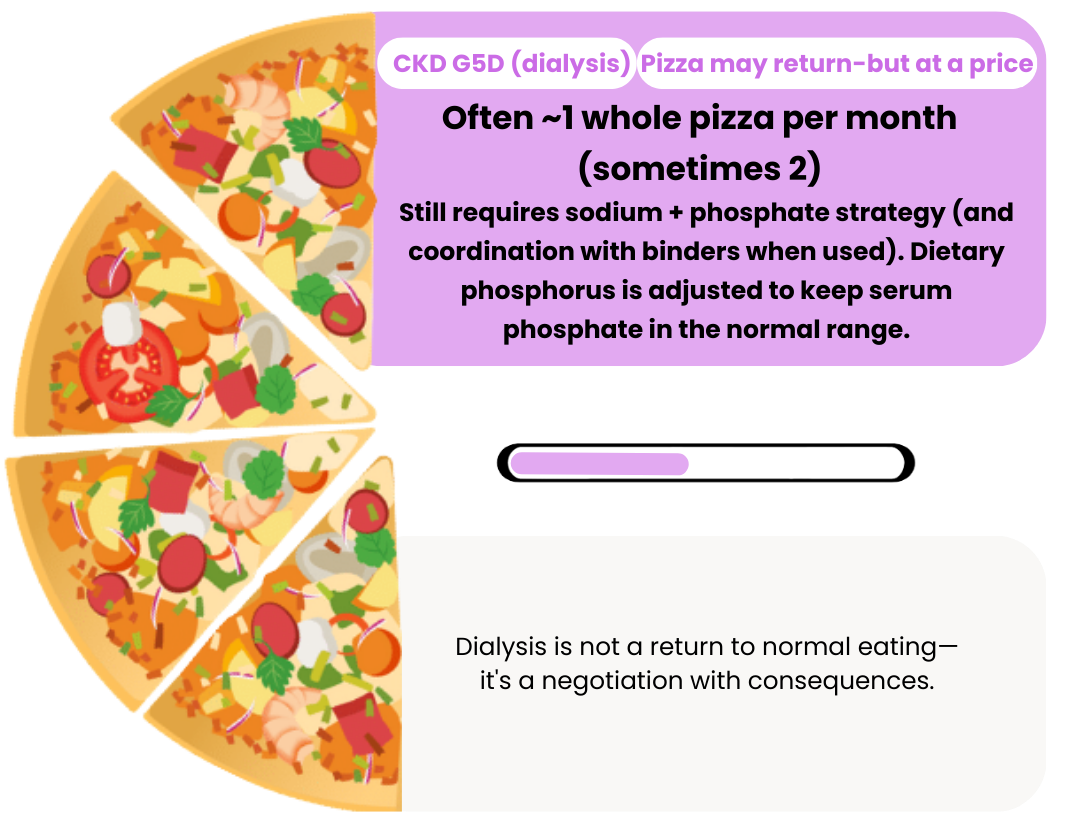
This month’s #SaveTheKidneys message is deliberately simple: chronic kidney disease can turn ordinary food into an extraordinary privilege.
Not overnight. Not dramatically. Just progressively—until the patient stops asking “what do I feel like eating?” and starts asking “what can I afford?”
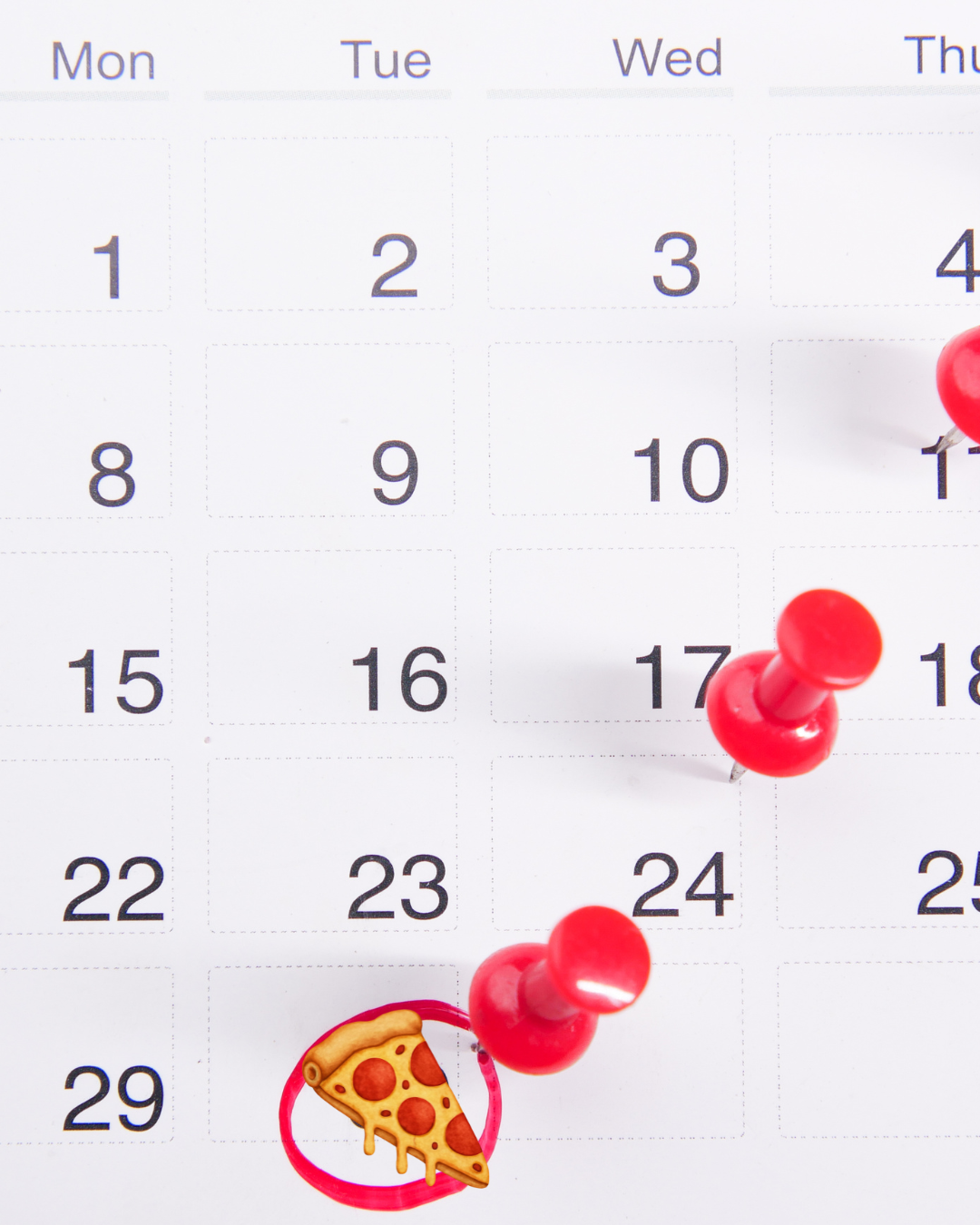
It’s not about whether you can eat pizza.
It’s about how often your kidneys let you.
It’s about how often your kidneys let you.
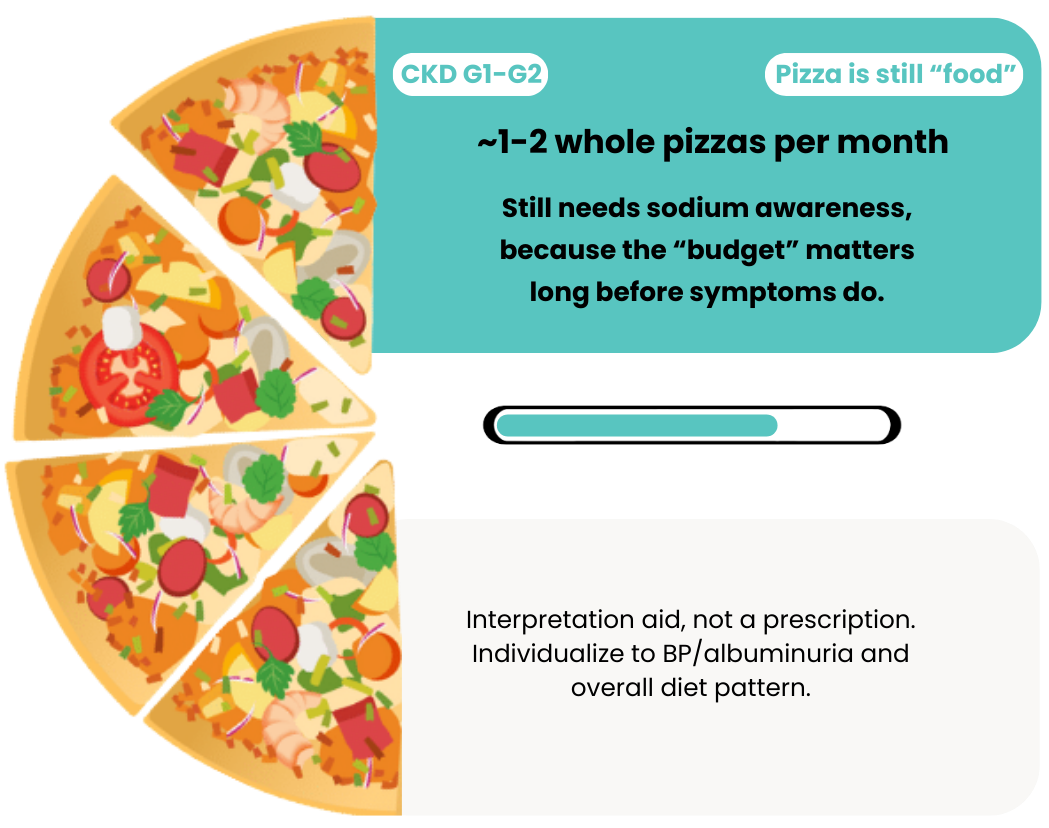
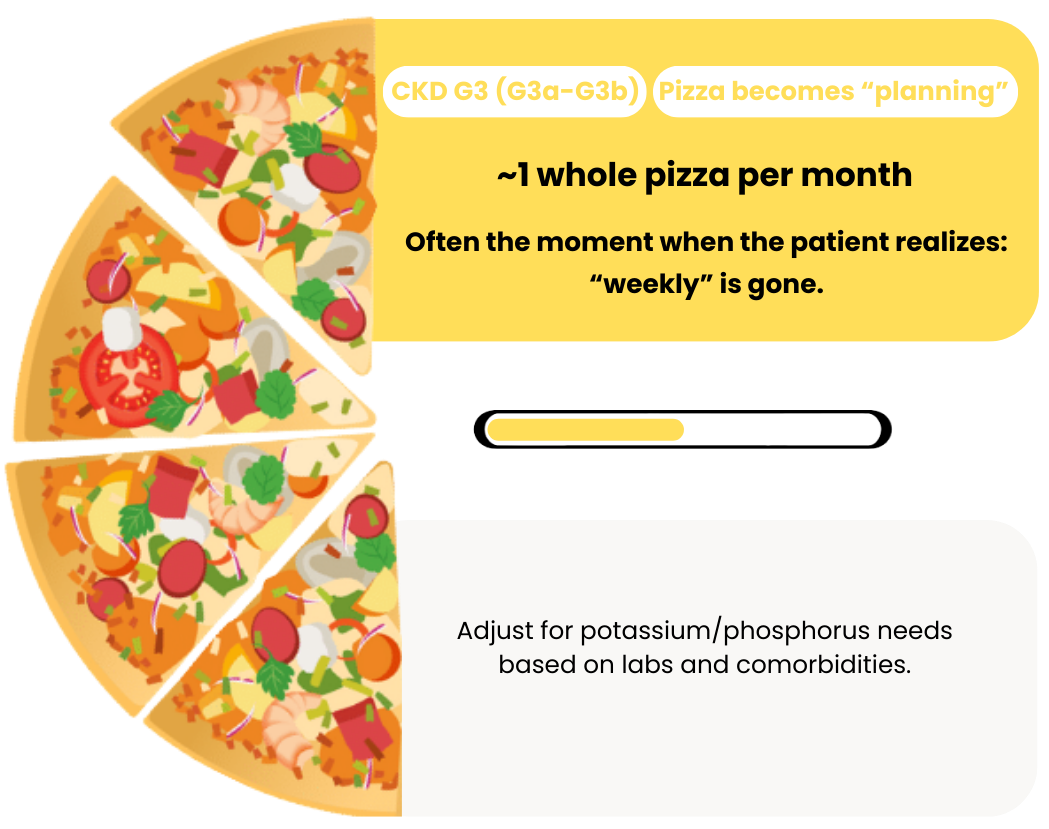
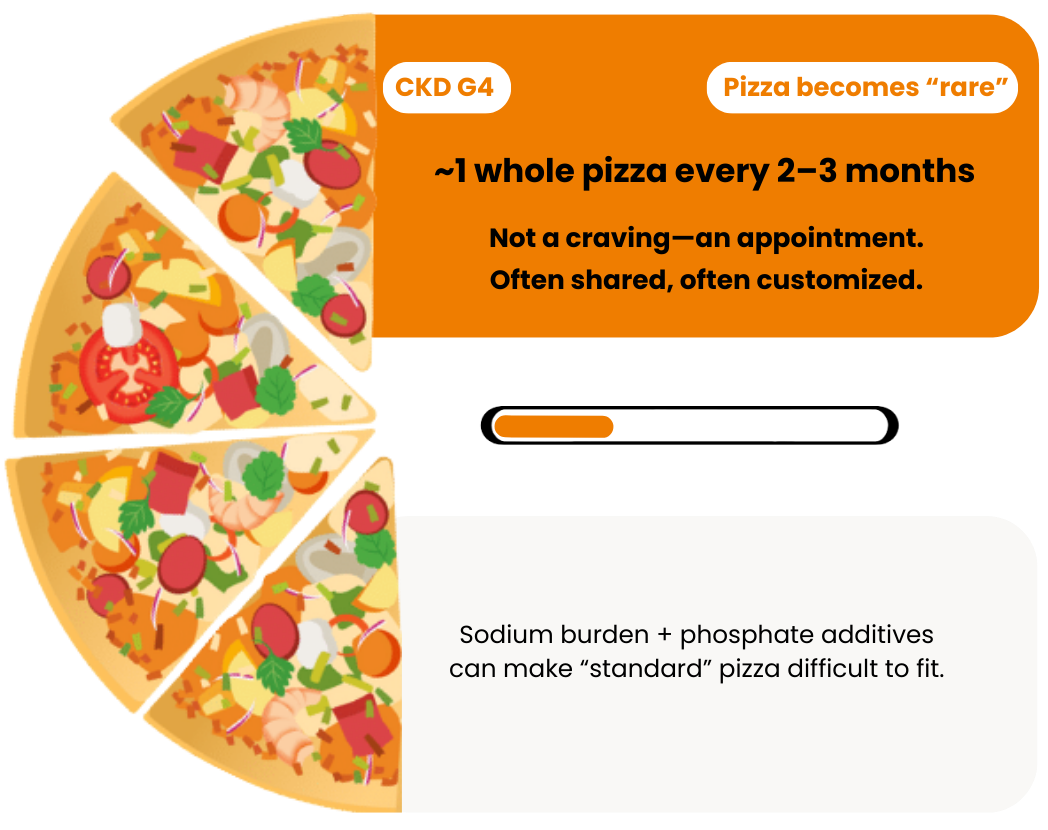
Why pizza hits so hard
-
KDIGO suggests sodium intake <2 g/day in people with CKD. A single high-sodium meal can consume multiple days of this “budget.”
-
A typical cheese slice can contain ~640 mg sodium, ~231 mg phosphorus, ~184 mg potassium. Multiply across slices and toppings, and the “ordinary” becomes difficult to fit.
-
NIDDK notes that CKD eating may require avoiding foods high in sodium, potassium, and phosphorus depending on the patient and lab values.
-
KDOQI nutrition guidance emphasizes adjusting dietary phosphorus to maintain serum phosphate in the normal range in hemodialysis patients.
Sources: KDIGO 2024 CKD guideline (sodium). NIDDK CKD healthy eating guidance (sodium/potassium/phosphorus). Nutrient example from MyFoodData/USDA-linked databases. KDOQI-related commentary on phosphorus targets in hemodialysis.
Medical disclaimer: This page is for awareness and clinician-patient communication. It does not replace individualized medical nutrition therapy. Always tailor to lab values, comorbidities, medications (e.g., binders), volume status, and local protocols.
Let’s keep “normal life” longer.
When CKD is recognized late, even pizza becomes extraordinary. If you want to discuss earlier pathways and better-informed decisions that protect kidney function and patient quality of life, we’re here.